

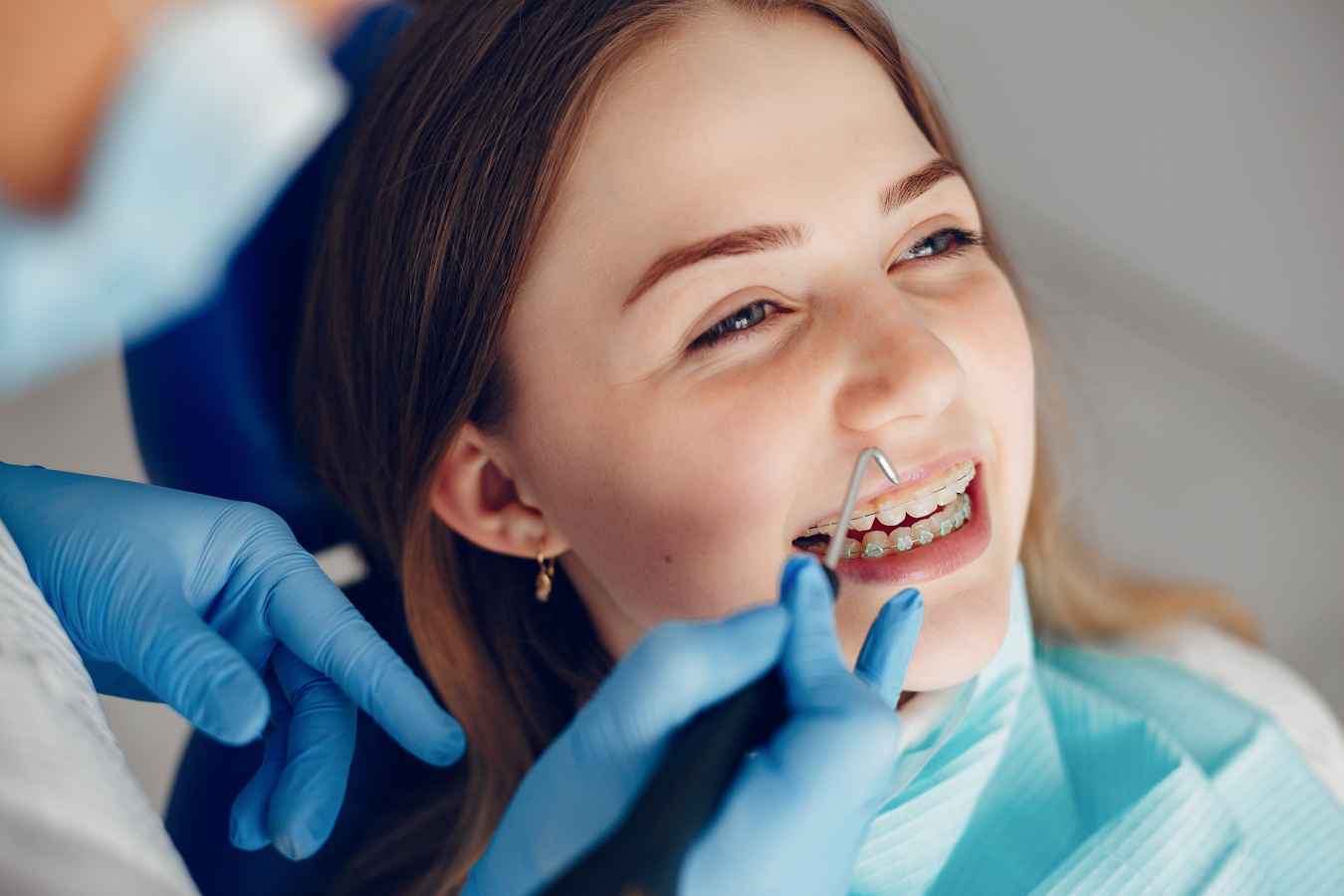
Getting braces put on usually does not require numbing shots. Brackets are glued to the outside of your teeth, so nothing is drilled or cut. Placement feels like pressure and jaw fatigue; most soreness starts a few hours later as teeth begin to move.
If you or your child has a braces appointment coming up at Hansen Orthodontics, it is normal to feel a little nervous. Knowing each step ahead of time takes most of the worry away. Here is what happens in the chair, what the first week feels like, and how to stay comfortable.
Do they numb your mouth before putting braces on?
In almost all cases, no. Numbing is used when a dentist needs to work inside a tooth or on the gums, such as for a filling or an extraction. Placing braces only involves the enamel surface, which has no nerves, so there is nothing to numb. You will be awake and comfortable the whole time and can talk, listen to music, or ask questions.
What you will actually feel
- Cheek retractor: a soft plastic holder keeps your lips and cheeks back so the teeth stay dry. It feels odd more than uncomfortable.
- Tooth conditioner: a mildly sour taste if any touches your tongue.
- Gentle pressure: as each bracket is pressed into place.
- Tired jaw: from keeping your mouth open, which fades soon after the visit.
When numbing or extra steps might come up
Some treatment plans include separate steps, such as placing temporary anchorage devices (TADs), which are described on our other treatments page. Dr. Hansen will explain ahead of time if your plan includes anything beyond standard bracket placement, so there are no surprises on the day.
What happens step by step when braces go on?
Your braces placement is usually one longer appointment. Here is the sequence most patients go through.
1. Cleaning and drying the teeth
The teeth are polished so the adhesive has a clean surface to grip. Then the retractor goes in and each tooth is dried, because moisture weakens the bond.
2. Preparing the surface
A conditioning gel is applied to the front of each tooth for a short time and rinsed off. This creates a slightly textured surface that helps the brackets hold securely for the length of treatment.
3. Placing and setting the brackets
Each bracket is coated with adhesive, positioned precisely on the tooth, and set with a curing light. Accurate placement matters, because the bracket position guides how the tooth moves over the coming months.
4. Adding the archwire
A thin wire is threaded through the brackets. With traditional braces it is held in place by small elastic ties, which is where you get to pick your colors. Self-ligating systems such as Damon and Empower, which we offer at Hansen Orthodontics, use a built-in slide mechanism instead of ties.
5. Care instructions before you leave
Our team shows you how to brush and floss around the brackets, gives you orthodontic wax, and explains what to do if something feels sharp. It is a good time to ask anything you are unsure about.
How long does it take to get braces put on?
Plan on one appointment that runs longer than a routine check-up, because every bracket is placed and set individually. The exact length depends on how many teeth are being bracketed and whether both arches are done at the same visit. Our team will tell you how much time to set aside when you schedule, so you can plan school or work around it.
Some plans bracket the upper and lower teeth on different days, for example when a deep bite means lower brackets would be knocked by the upper teeth at first. If that applies to you, Dr. Hansen will explain why and what the order will be.
How do you brush and floss with brand-new braces?
Cleaning habits matter most in the first few weeks, while you are learning the routine. Brush after meals, angling the bristles down toward the brackets from above and then up from below, and spend a little time on each tooth. Floss once a day with a floss threader or orthodontic floss that slides under the wire. Our guide to flossing with braces walks through it step by step.
Your gums may feel slightly tender for the first few days, which can make people brush less. Gentle, thorough brushing is still the best thing you can do, because plaque trapped around new brackets is what leads to white spots on the enamel later.
Which type of braces feels different to get?
The placement process is similar for every bracket type, but each option looks and feels a little different day to day. Our braces page describes each in detail.
| Braces type | What holds the wire | How it looks | Worth knowing |
|---|---|---|---|
| Traditional metal | Elastic ties | Silver, with color choices for the ties | Durable and handles complex cases |
| Clear ceramic | Elastic ties | Blends with your teeth | Can stain more easily, so care matters |
| Gold or champagne | Elastic ties | Gold or rose-gold finish | Same strength as metal with a different look |
| Damon self-ligating | Built-in slide | Low-profile brackets | No elastic ties to change |
| Empower self-ligating | Built-in slide (active or passive) | Low profile, rounded edges | Designed to reduce irritation |
If you are weighing looks, our comparison of clear ceramic vs. metal braces goes deeper.
Does getting braces hurt afterward?
The placement itself is not painful. What most people notice is tenderness that starts a few hours later, when the wire begins putting gentle pressure on the teeth. Teeth can feel sore when biting, and the inside of the lips and cheeks may feel rubbed while they get used to the brackets.
What the first week usually looks like
Soreness is typically strongest over the first few days and then fades steadily. By the end of the first week most patients are eating more normally and have stopped noticing the brackets much. You may feel a milder version of this after some adjustment visits.
How to stay comfortable
- Press a small piece of orthodontic wax over any bracket that rubs. Our guide to using dental wax shows how.
- Choose soft foods such as yogurt, soup, pasta, eggs and smoothies for the first few days.
- Rinse with warm salt water if your cheeks feel irritated.
- Over-the-counter pain relievers can help; follow the label or ask your doctor what is right for you.
We cover more comfort strategies in our post on orthodontic treatment and pain relief.
When should you call the orthodontist after getting braces?
Mild soreness is expected, but some things are worth a call. Contact us if a wire is poking and wax does not help, a bracket comes loose, or pain is getting worse instead of better after several days. Our emergency orthodontic care page explains what counts as urgent and simple fixes you can try at home until you are seen.
How can you prepare for your braces appointment?
- Eat a meal beforehand, since your teeth may be tender for dinner.
- Brush and floss well so the teeth are clean.
- Bring lip balm; lips can feel dry after the retractor.
- Think about colors ahead of time if you have traditional ties.
- Stock soft foods at home for the first few days.
For teens, it helps to schedule placement when there is not a big test, game or event the next day. Our braces for teens page covers other questions teens and parents ask.
Frequently Asked Questions
Will I need shots to get braces?
Usually not. Brackets bond to the enamel surface, so standard placement is done without anesthetic.
Can I go to school or work after getting braces?
Yes. Most people return to normal activities the same day. You may simply want softer foods for lunch.
What happens at the first adjustment visit?
Our team checks that every bracket is secure, looks at how the teeth are responding, and may change the wire or ties. It is shorter than the placement visit and a good time to ask about anything that has been rubbing.
Does it hurt when braces are tightened?
Adjustment visits can bring back mild soreness for a day or two, but it is usually less than the first week.
Ready to get started?
If you are still deciding on treatment, the first step is a no-cost visit with Dr. Hansen. Request a free consultation at our Wichita, Goddard or Hutchinson office, or call or text (316) 722-6717 with any questions about your upcoming appointment.