Frequently Asked Questions
How Much Do Braces Cost in Kansas?
The cost of braces in Kansas can vary depending on the type of treatment needed and the orthodontist. Typically, traditional braces cost between $3,000 to $7,000, while Invisalign ranges from $4,000 to $8,000. Insurance coverage and payment plans may help make orthodontic treatment more affordable. Contact local orthodontists for specific pricing.
What Is an Orthodontist?
An orthodontist is a dental specialist who focuses on correcting the alignment of teeth and jaws using braces, Invisalign, and other orthodontic treatments. They help children, teens, and adults achieve straighter smiles and improve oral health. Orthodontists play a crucial role in enhancing facial aesthetics and overall confidence.
What factors affect braces pricing?
Braces pricing can be influenced by various factors such as the type of braces (traditional metal, ceramic, or Invisalign), the complexity of the case, the duration of treatment, additional services required (like retainers), and the orthodontist's expertise and location. Insurance coverage and flexible payment plans can also impact the overall cost.
Are payment plans available for braces?
Yes, at Hansen Orthodontics, we offer flexible payment plans for braces to make orthodontic treatment accessible and affordable for our patients. Contact us to discuss personalized financial options tailored to meet your needs.
How long does orthodontic treatment last?
The duration of orthodontic treatment varies based on individual needs. On average, treatment can last from 12 to 36 months, but some cases may require shorter or longer periods. Consulting with an orthodontist will provide a personalized timeline based on your specific situation. Regular appointments and following treatment guidelines are essential for optimal results.
Do braces prices vary by type?
Yes, braces prices vary by type, with traditional braces typically costing less than Invisalign. The total cost depends on the complexity of the case and the length of treatment. Additional factors like insurance coverage and payment plans can also impact the final price.
Whats the average cost of Invisalign?
The average cost of Invisalign treatment can vary depending on factors like location, complexity of the case, and duration. On average, Invisalign treatment typically ranges from $3,000 to $8,000. It's best to consult with an orthodontist for an accurate estimate tailored to your specific needs.
Can dental insurance cover brace costs?
Dental insurance may help cover some orthodontic costs, including braces, depending on the policy. It's essential to check your insurance plan details for coverage specifics, such as age limitations, waiting periods, and percentage of coverage. Contact your insurance provider or our office for assistance in understanding your coverage.
What age is best for braces?
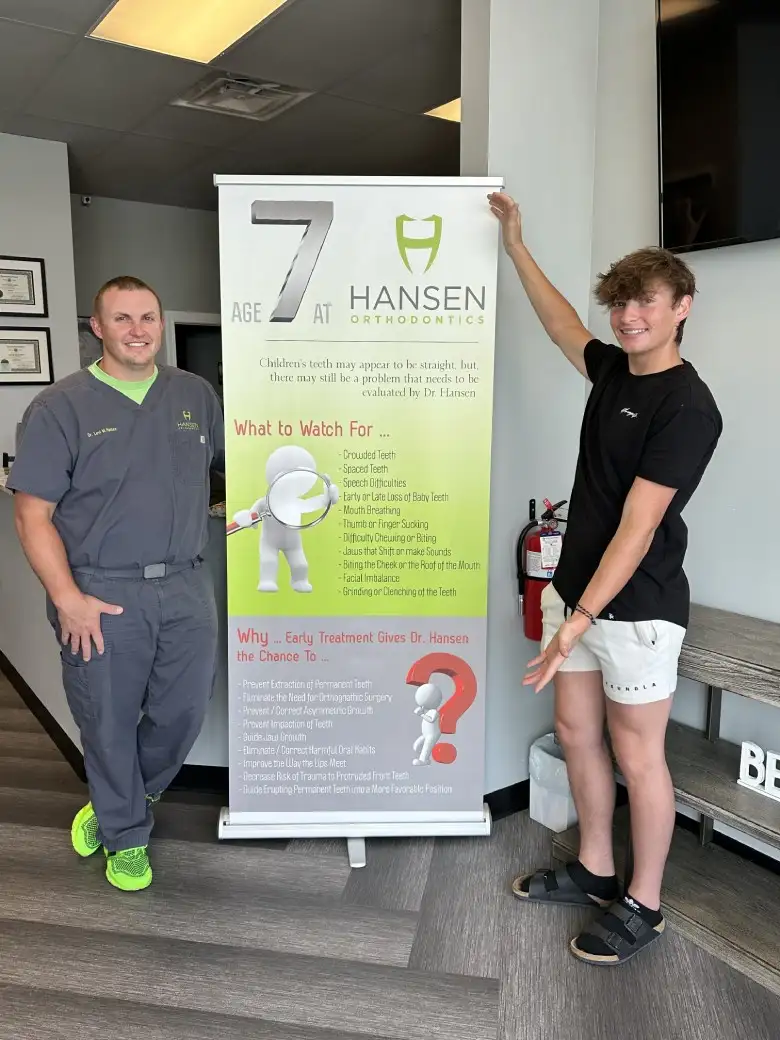
Orthodontic treatment with braces is typically recommended for children aged 7 to 14; however, adults can also benefit. The optimal age for braces depends on individual needs and oral health. It's best to consult an orthodontist for personalized advice.
Are there less visible braces options?
Yes, at Hansen Orthodontics, we offer Invisalign as a less visible braces option for patients seeking a discrete orthodontic treatment. Invisalign provides a clear aligner system that is hardly noticeable, making it a popular choice for both teens and adults looking for a more subtle way to straighten their teeth.
Do braces require special dental care?
Braces require special dental care, including regular brushing, flossing, and avoiding certain foods to prevent damage. Additional tools like interdental brushes and floss threaders may be necessary for proper maintenance. Regular orthodontic check-ups are crucial for adjustments and ensuring the braces are working effectively.
How often are orthodontic appointments needed?
Orthodontic appointments are typically needed every 4 to 8 weeks to monitor progress, make adjustments, and ensure treatment is on track. The frequency may vary based on individual treatment plans and the orthodontist's recommendation. Regular appointments are crucial for the success of your orthodontic treatment.
What qualifications should an orthodontist have?
An orthodontist should have a DMD or DDS degree, followed by completion of a specialized orthodontic residency program. Board certification and state licensure are necessary. Look for experience, patient reviews, and a focus on continuous education in the field to ensure quality care.
Can orthodontists correct overbites with braces?
Orthodontists can correct overbites with braces by using various techniques like braces, headgear, or rubber bands to gradually shift the teeth and jaw into the correct alignment. Treatment duration and methods may vary based on individual cases. Consulting with an orthodontist is crucial for personalized treatment plans.
Are retainers included in braces treatment?
Retainers are typically included in braces treatment plans. After braces are removed, retainers help maintain teeth alignment. They may be fixed or removable, depending on the orthodontist's recommendation. It's crucial to follow the retainer schedule to prevent teeth from shifting after orthodontic treatment.
How do braces fix gap teeth?
Braces for gap teeth work by applying gentle and consistent pressure to slowly shift the teeth into the correct alignment. Over time, this process closes the gap and helps create a straighter smile. Regular adjustments are made to ensure the teeth move correctly.
What is the purpose of spacers?
Spacers are used to create small gaps between teeth before placing braces. They help make room for the bands used in orthodontic treatment. These separators are essential for ensuring proper alignment and effective positioning of braces during the overall treatment process.
Can adults benefit from orthodontic braces?
Adults can benefit from orthodontic braces to achieve a happy, healthy smile at any age. Hansen Orthodontics offers affordable treatments, including braces and Invisalign, tailored to individual needs. With state-of-the-art techniques and experienced care, adults can achieve their desired smile transformation.
Whats the difference between braces brands?
The difference between braces brands lies in factors like materials used, design variations, and treatment duration. Common brands include traditional metal braces, ceramic braces, and lingual braces. Each brand offers unique benefits and may vary in cost, appearance, and effectiveness in correcting orthodontic issues. It's essential to consult with an orthodontist to determine the best braces brand for individual needs.
How to choose a reliable orthodontist?
When choosing a reliable orthodontist, consider factors such as experience, patient reviews, treatment options offered, and the orthodontist's communication style. Look for a provider who offers personalized treatment plans, uses the latest technology, and has a friendly, professional team. Schedule a consultation to see if you feel comfortable and confident in their care.
Can braces correct all bite issues?
Braces can effectively correct various bite issues, including overbites, underbites, crossbites, and misaligned teeth. However, severe cases may require additional orthodontic interventions or surgical procedures for optimal results. Consulting with an orthodontist will help determine the best treatment plan for specific bite concerns.
Whats involved in an orthodontic consultation?
During an orthodontic consultation, the orthodontist will assess your teeth, bite, and jaw alignment. They will discuss treatment options, costs, and expected timeline. X-rays, photos, and impressions might be taken. The orthodontist will address your concerns and create a personalized treatment plan.
Is sedation used during orthodontic procedures?
In some cases, sedation can be used during orthodontic procedures, especially for patients who experience anxiety or have difficulty sitting still for extended periods. The type of sedation used varies based on the patient's needs and the complexity of the procedure, with options ranging from local anesthesia to general sedation administered by an anesthesiologist. It is essential to discuss any concerns or preferences regarding sedation with your orthodontist before the procedure.
How to manage discomfort from braces?
To manage discomfort from braces, try using orthodontic wax to ease irritation, rinse with warm salt water, take over-the-counter pain relief, consume soft foods, and follow your orthodontist's advice for adjustments. Proper oral hygiene and patience during the adjustment period are key.
Are there alternatives to traditional braces?
Yes, at Hansen Orthodontics, we offer Invisalign as an alternative to traditional braces. Invisalign utilizes clear aligners to straighten teeth discreetly and effectively. Contact us for a free consultation to explore this treatment option further.
What dietary changes are needed for braces?
When wearing braces, it's important to make dietary adjustments to avoid damaging the braces or teeth:
Avoid sticky, chewy, or hard foods that can damage brackets and wires.
Cut fruits and vegetables into small, bite-sized pieces.
Opt for soft foods like yogurt, soups, and smoothies.
Limit sugary and acidic foods to protect teeth.
Stay hydrated with water to maintain oral health during treatment.
How do clear aligners straighten teeth?
Clear aligners, like Invisalign, gently shift teeth into alignment by applying controlled force. These custom-made aligners are changed every few weeks, gradually moving teeth into the desired position. They are virtually invisible and removable for eating and oral hygiene, making them a popular choice for orthodontic treatment.
Can one switch orthodontists mid-treatment?
Yes, it is possible to switch orthodontists mid-treatment. Patients can transfer their treatment to a new orthodontist for various reasons such as relocation or dissatisfaction. The new orthodontist will assess the current progress and continue the treatment plan to achieve optimal results. Each case is unique, and communication between both orthodontists is essential for a smooth transition.
Do orthodontists treat TMJ disorders?
Orthodontists can help with TMJ disorders by providing treatments like braces or Invisalign to correct misalignments contributing to the issue. However, it's essential to consult with a specialist or oral surgeon for comprehensive TMJ disorder management.
Are braces safe for young children?
Braces are safe for young children when recommended by an orthodontist. Early intervention can prevent future problems. Consult with an orthodontic professional to determine the best treatment for your child's dental health.