

An underbite means the lower front teeth sit in front of the upper front teeth when you bite down. It comes from tooth position, jaw growth or both, and is treated with appliances, braces, aligners or, in severe adult cases, surgery.
Many parents first notice an underbite in photos, when a child’s chin looks a little forward or the lower teeth show more than the upper ones. Adults sometimes notice it later, when chewing feels awkward or front teeth start to wear. We see underbites in children, teens and adults at our Wichita, Goddard and Hutchinson offices, and the plan looks different at each age.
What does an underbite look like?
In a typical bite, the upper front teeth overlap the lower front teeth slightly when you close. With an underbite, that overlap is reversed. The lower front teeth land ahead of the upper ones, and the lower jaw may look prominent from the side.
Underbites range from mild to severe. In a mild case, the front teeth meet nearly edge to edge, and the difference is hard to see unless you look closely. In a more noticeable case, the lower teeth sit well forward, the chin looks strong, and the upper lip may look like it sits back. Some people only show an underbite on a few front teeth, which is closer to an anterior crossbite. We explain that related problem in our post on what a crossbite is.
A quick home check: have your child close on their back teeth, then gently pull the lips apart. If the lower front teeth sit in front of the uppers, it is worth scheduling an orthodontic exam.
What causes an underbite?
Many underbites are skeletal, meaning they come from the size and growth of the jaws. The lower jaw may grow more than the upper jaw, the upper jaw may be smaller or set back, or both can happen together. Jaw size tends to run in families, so underbites often show up in parents and their children.
Other underbites are dental. The jaws may be a normal size, but the upper front teeth tip backward or the lower front teeth tip forward, so the teeth meet in reverse. Early childhood habits, such as long-term thumb sucking or a tongue that pushes forward against the teeth, can affect how the teeth and upper jaw develop. Crowding and baby teeth lost too early or too late can also steer teeth out of position.
Telling these causes apart matters, because a dental underbite can often be corrected by moving teeth, while a skeletal one may need help guiding jaw growth. Our iCat cone beam scanner gives a 3D view of the teeth, bones and surrounding structures, which helps us see what is driving the bite.
Why does an underbite matter?
An underbite can affect more than appearance. When the front teeth do not overlap the right way, biting into foods like sandwiches or apples can be harder, and the back teeth may take on extra work. Teeth that meet edge to edge can chip or wear down over time.
The jaw joints and chewing muscles also have to work around the bite. For some people, that can contribute to jaw discomfort. Speech can be affected too, since the tongue and lips rely on the teeth being in the right spots for certain sounds.
Many people simply want to feel comfortable with their profile and smile. That is a valid reason to ask about treatment.
How is an underbite corrected in children?
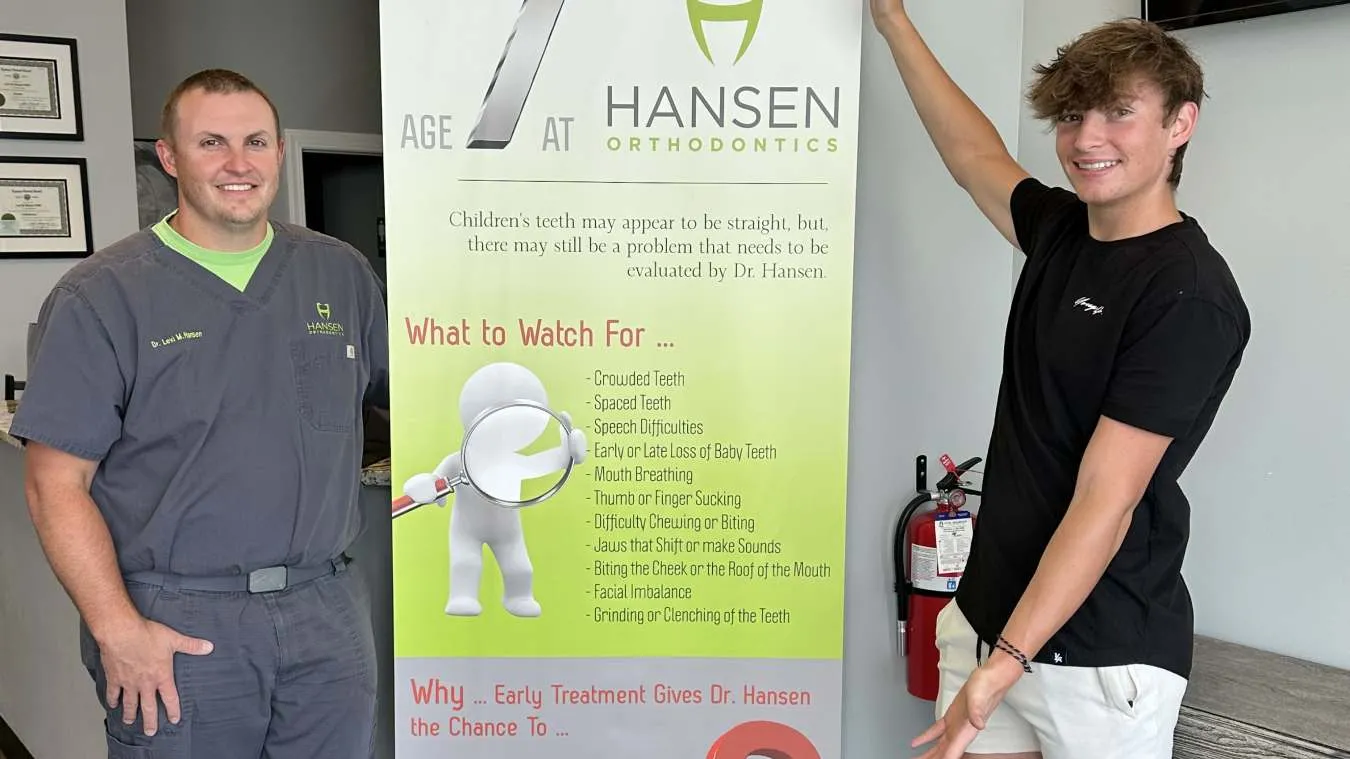
Childhood is the window when growth can still be guided. The American Association of Orthodontists recommends a first orthodontic visit around age seven, and an underbite is one of the problems that early exam is designed to catch. You can read more about timing in why age 7 is key for an orthodontic consultation.
When the upper jaw is narrow or underdeveloped, a palatal expander can widen it and create more space for the upper teeth to line up properly. Other appliances may be used to guide growth in specific cases. Because the jaws are still developing, early treatment can make later treatment simpler, and it is often followed by a second phase once the adult teeth are in.
Our post on two-phase orthodontic treatment explains how an early phase and a later phase fit together. Not every child with an underbite needs to start right away. Sometimes the right move is to monitor growth, and an exam tells us which path makes sense.
How is an underbite corrected in teens and adults?
For teens and adults, treatment centers on moving the teeth and, when needed, working with the jaw position that is already set. A dental underbite can often be corrected with braces, which let us control the position of each upper and lower tooth. Rubber bands that connect the upper and lower teeth can help shift the bite as treatment moves along.
Clear aligners are another option. Invisalign Teen can treat a wide range of bite problems, including underbites, and Invisalign is also available for adults. In some cases, small anchors called TADs give us a fixed point to move teeth more precisely.
When the jaws themselves are out of line and braces alone cannot fix the bite, surgical orthodontics may be recommended. In that case, Dr. Hansen works with an oral and maxillofacial surgeon. Surgery is completed only after the jaw is finished growing, which typically happens by age sixteen for females and eighteen for males. Our post on when jaw surgery is necessary covers that process.
How do underbite treatments compare?
Here is a side by side look at the main options. Many plans combine more than one.
| Treatment | How it helps | Typical candidate | Timing |
|---|---|---|---|
| Palatal expander | Widens a narrow upper jaw so the upper teeth can sit farther forward | Children with a narrow or underdeveloped upper jaw | While the jaw is still growing |
| Braces | Moves each upper and lower tooth into a better bite | Dental underbites at most ages | Children, teens and adults |
| Clear aligners | Moves teeth with a series of custom trays | Many teens and adults with dental underbites | Teens and adults |
| Surgery with orthodontics | Repositions the jaw bones, then braces finish the bite | Severe skeletal underbites | Only after jaw growth is complete |
What happens after jaw surgery for an underbite?
Jaw surgery is a major procedure, so recovery takes planning. Patients usually need to rest for about two weeks and take time off work or school while they heal. After that, orthodontic treatment picks back up to fine-tune how the teeth fit. Most people wear braces for six months to a year after surgery.
Once the braces come off, a retainer holds the new bite in place. Our guide to the types of retainers after braces walks through the options we offer, from clear retainers to bonded wires.
Frequently Asked Questions
Can an underbite correct itself?
An underbite that comes from jaw growth does not usually go away as a child gets older. A mild dental underbite may change as new teeth erupt, but an exam is the only way to know whether to treat now or watch.
Can adults fix an underbite without surgery?
Many can. If the underbite comes mainly from tooth position, braces or clear aligners can often correct it. Surgery is considered when the jaws are out of line and no amount of braces can correct it.
Is an underbite the same as a crossbite?
They are related. An underbite usually involves the front teeth and the overall jaw relationship. A crossbite can involve one tooth or one side of the mouth, including the back teeth.
How do I know which treatment my child needs?
It depends on the cause, the severity and how much growth is left. At the first visit, we take digital scans and X-rays to see what is driving the bite before recommending a plan.
Schedule an Underbite Exam in Wichita
If you have noticed lower teeth sitting in front of the uppers, a forward chin, or trouble biting into food, an exam can answer your questions. Dr. Hansen sees patients in Wichita, Goddard and Hutchinson. Call or text (316) 722-6717 or request a free consultation to get started.